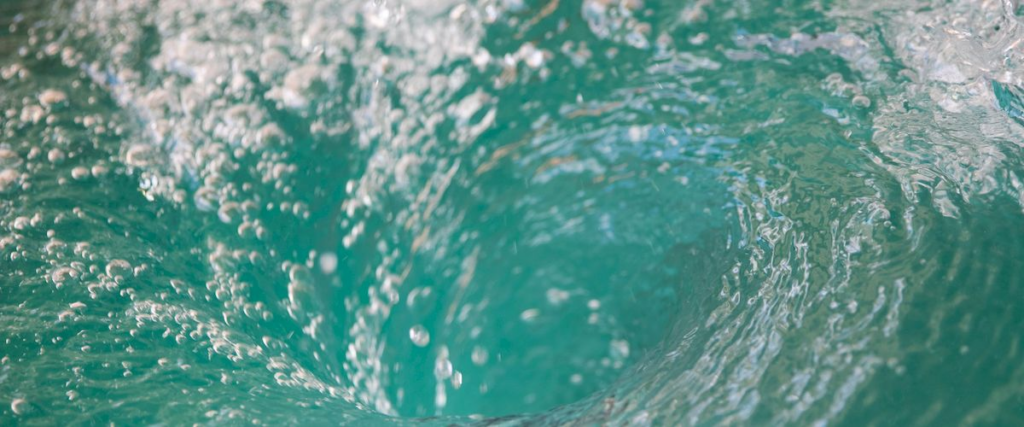
Water Is at the Heart of Every Form in Nature
Water lies at the center of every form found in nature; it underpins the relationships between all kingdoms, all individuals within each kingdom, and all parts within each individual. In other words, water is the indispensable medium for any systemic and integrative approach to health. :contentReference[oaicite:1]{index=1}
Water makes up about 70% of our body and 85% of our brain. The sanitary and ecological state of our planet is disastrous, resulting from major and multiple pollution sources: petroleum and nuclear derivatives, pharmaceuticals, industrial and military waste, “sanitary” agricultural chemicals… as well as the full range of electromagnetic waves spanning the known spectrum. :contentReference[oaicite:2]{index=2}
Interactions between these pollution sources create an extremely toxic chaos that is very difficult to study—an “informational glue” from which no one can truly claim to be protected. :contentReference[oaicite:3]{index=3}
Warning signals regarding surface waters and underground aquifers are alarming, and easy to connect with the general deterioration of public health (childhood autism, cancers, Parkinson’s, Alzheimer’s, infertility, genital malformations…). :contentReference[oaicite:4]{index=4}
Faced with this terrible observation, one can turn to preserved natural springs. Yet long-term storage in bottles—especially plastic—exposed to sunlight or particular environmental nuisances (noise, microwaves, pulsed currents) alters the spring’s natural qualities… and plastics release phthalates, known for their neuro-endocrine and immune toxicity. :contentReference[oaicite:5]{index=5}
How can we be sure that spring water retains its vital quality over time, and understand its chemical and physical effects on human health—knowing that the younger the organism (thus the richer in “free water”), the stronger the potential impact of that water? :contentReference[oaicite:6]{index=6}
It’s Not Only About Drinking Water
It is not only a matter of caring about drinking water, but also shower and bath water (we also absorb through the skin and mucous membranes), and the water used to wash vegetables or cook soup… then the water in streams and rivers, and the oceans where this pollution constantly accumulates. :contentReference[oaicite:7]{index=7}
Water is the only element that exists simultaneously in four different states (solid, liquid, gaseous, and liquid-crystalline = structured water), in constant interaction through phase changes dependent on climatic and environmental conditions.
In these interphases, water changes its internal physical structure and gains or loses particular qualities associated with dissolved elements and information, shaping the arrangements of water molecules (= clusters). Examples: dew, thunderstorms, waterfalls, evaporation, ice, snow… :contentReference[oaicite:8]{index=8}
The Physics of Water
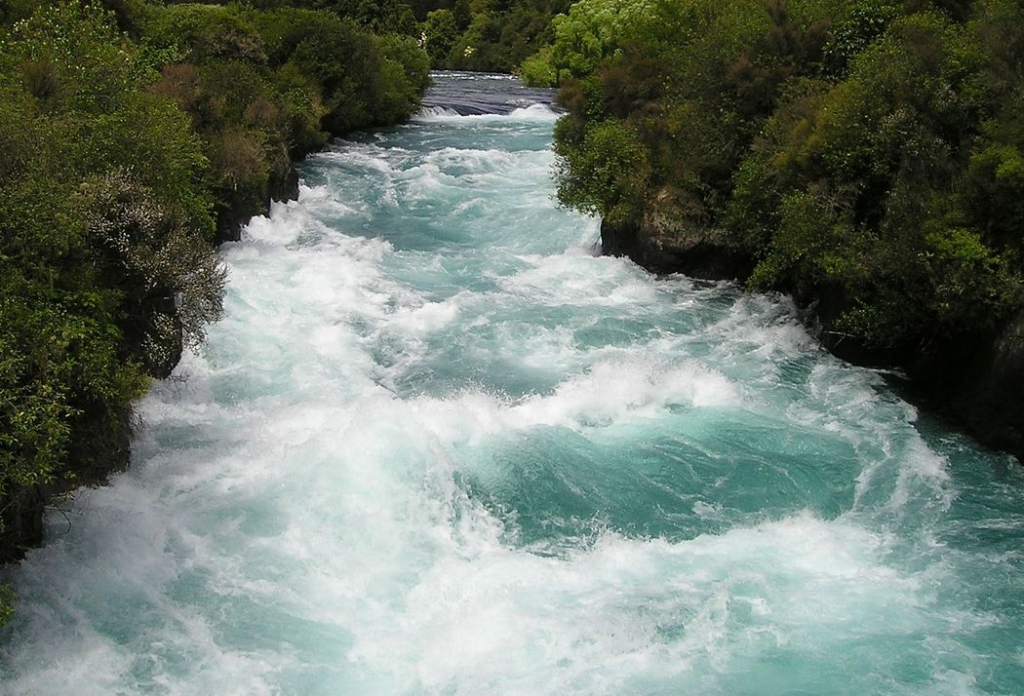
Physical aspects have been studied notably by Russian physicists (see the film Water published by Éditions Jupiter), and also in Europe by German and Austrian researchers (Schauberger, Plocher, and especially Alexandre Lauterwasser: see the remarkable film about his work, Images sonores d’Eau, distributed by Éditions Alternature). :contentReference[oaicite:9]{index=9}
They show that water’s capacity to store information is immense and durable, and that the information contained in water is more important than chemistry in its effects on living systems. :contentReference[oaicite:10]{index=10}
According to Marc Henry (Professor of Chemistry at the University of Strasbourg and a major water specialist), in mathematical modeling our DNA does not function without water; and water’s “memory” capacities are such that a human being’s DNA could be contained in a drop of water, and humanity’s DNA in 108 liters… Moreover, the durability of informational imprinting in water could be long enough to become dangerous to public health, as it could transmit infectious diseases even after being sterilized by conventional technical means before collective distribution. :contentReference[oaicite:11]{index=11}
The work of Professor Luc Montagnier (Nobel Prize in Medicine and co-discoverer of the AIDS virus), presented at the end of 2007 in Lugano, is said to show this clearly and to validate the earlier work of Jacques Benveniste on the “memory of water,” which was strongly criticized by the scientific community at the time. Physicists tell us that water is a quantum medium in interrelation with all constituents and aspects of its environment. :contentReference[oaicite:12]{index=12}
Everyone has the right to consider this important—or not. :contentReference[oaicite:13]{index=13}
In a systemic approach to the problem posed by the current state of water—considered as an interactive whole—everything we implement locally will have a general impact on the entire system.
If water retains, after mechanical filtration, the memory of everything it has contained or encountered—imprinted within it as clusters—one can find within it the 50 Hz current of our homes, emissions from computers and microwaves, Wi-Fi, music and “psy” waves… in addition to de-structuring effects linked to the angles of our water pipes (generally 90°). Together, this forms the “bandwidth” of water. :contentReference[oaicite:14]{index=14}
The informational “glue” therefore remains present, and some physicists—such as the Russian academician Kaznacheev—claim that “high dilutions” of substances are the most dangerous (as Rudolf Steiner also stated). This does not surprise homeopathy practitioners, but how can we make this water “memory,” linked to cluster arrangements, disappear or be modified? :contentReference[oaicite:15]{index=15}
- By heating water up to 70°C, because at that temperature it releases its information.
- By using vortices, whirlpools, and obstacles (angles) whose geometry is chosen to modify internal cluster organization; these forms generate static and dynamic torsion fields (also called scalar or morphogenetic fields) capable of re-informing and structuring water, thus coupling it with consciousness.
- By using magnetic fields (magnets), sounds and frequencies, complex shapes, minerals and crystals.
- But also through the power of thought and prayer, chants and music.
In short, there are many means, and everyone can find their own according to personal affinity and level of information. The difficulty is to “objectify” the result and verify in living systems that the action taken is truly positive, carrying order and health. :contentReference[oaicite:16]{index=16}
Water Filtration via Chemical and Mechanical Means
The chemical aspects of water quality have been well studied in France by the physicist Louis-Claude Vincent. His work shows a close correlation between parameters measured in water (pH, rH2, resistivity in saliva, blood, and urine) and the health status of human populations and nature (see “Bioelectronics of Vincent”). :contentReference[oaicite:17]{index=17}
Most purification devices operate through filtration and absorption with varying levels of performance, requiring specific filters to be replaced periodically depending on targeted toxins, and regular monitoring to detect early filter saturation and replacement needs. :contentReference[oaicite:18]{index=18}
Such devices require technical profiling adapted to the water you want to purify: you must first assess the water in order to then monitor filtration effectiveness on key parameters—e.g., nitrates, pesticides, aluminum or arsenic, pharmaceuticals, phthalates or PCBs, radioactivity… :contentReference[oaicite:19]{index=19}
The toxic parameters targeted by filtration do not disappear from the environment; they are simply diverted toward an inert adsorbent substance that attracts them like a magnet and will later have to be treated (once saturated) by another collective purification system or incineration. Or they are redirected in active form by a filter—or a series of self-cleaning filters—discharged into sewer collectors and the nearest rivers. :contentReference[oaicite:20]{index=20}
Nevertheless, this method remains indispensable as a first step to protect human and animal health, while ecological awareness continues to develop. :contentReference[oaicite:21]{index=21}
An alternative to direct release into the natural environment exists via constructed wetland systems (“phyto-purification”) using bamboo and reeds, which can buffer and likely modify pollutant structure. They also make it possible to monitor pollution markers at the outlet and stimulate reflection and research to help nature and reduce upstream pollution. :contentReference[oaicite:22]{index=22}
Finally, since tap water is legally considered potable (sometimes at the price of an administrative adjustment raising acceptable pesticide levels overnight), each person can choose whether to go further in terms of health requirements—or not. :contentReference[oaicite:23]{index=23}
Ways to Approach (Assess) Water Structure
Three accessible methods exist, aside from direct sensory perception of effects (which cannot easily be translated into images and diagrams): :contentReference[oaicite:24]{index=24}
- Sensitive crystallizations, used to objectify the “formative forces” at work in water and nature—and therefore in any substance used as food or medicine.
- GDV camera and the BioWell system of Dr. Konstantin Korotkov, used to analyze photonic emissions from fingertips and reconstruct images corresponding to the body’s energy circuits (acupuncture meridians, chakras, “aura”).
- Dr. Masaru Emoto’s method, used to observe—via ice crystallization (ultra-fast freezing)—the effects of music, emotions, and thoughts on water’s internal structure and on living systems; the harmony of ice crystallization (hexagonal structure) is said to reflect the quality of information transmitted to water.
One can also develop frequency-based measurement tools for dissolved molecules in water (all molecules vibrate) or their residual trace as water clusters, with computer analysis (Fourier transforms) to observe structural modifications in water after treatment by a particular method. :contentReference[oaicite:25]{index=25}
The work of Jacques Benveniste, currently relayed by Professor Luc Montagnier, goes in this direction and leads to an informational and scientific approach to the notion of “terrain,” and to modulation of this terrain by inexpensive physical means (frequencies, magnetic fields, torsion fields…). :contentReference[oaicite:26]{index=26}
In the context of large-scale distribution of city water or spring water, being able to demonstrate that this water preserves its native qualities from its catchment area—and carries neither toxins nor disturbing information even after prolonged storage (tests over 1 month, 3 months, or even 6 months)—would already be a remarkable innovative concept. :contentReference[oaicite:27]{index=27}
Because an excellent initial water can easily deteriorate if its internal structure (clusters) is unstable and if its bottling and distribution environment is disruptive. In nature, water remains “alive” thanks to vortices and whirlpools. :contentReference[oaicite:28]{index=28}
It has been established experimentally that objects presenting a “golden” cross-section (PHI) can be described as passive torsion generators. :contentReference[oaicite:29]{index=29}
Using a vortex-generating system built according to sacred geometry and the golden ratio—closely linked, according to some, to torsion fields in nature and to our DNA, and even to consciousness (as proposed by the Russian physicist Kozyrev)—and capable of generating stable and durable wave trains in water in conformity with natural processes, could optimize the radiation and vitality of this water and support global health. :contentReference[oaicite:30]{index=30}
